


7 Urdu ashaar / shayari (shers, couplets) by
Khumar Barabankvi
1890-1960,
Moradabad (Uttar Pradesh)
Khumar Barabankvi Biography
Khumar Barabankvi was the kind of poet who could make a hall fall silent with a single couplet. Born Mohammed Haidar Khan in Barabanki in 1919, he grew up in a family deeply connected to poetry. His father, Dr. Ghulam Haider, wrote marsiyas under the pen name Bahar, while his uncle, Qaraar Barabankvi, helped guide his early steps in verse. The name Khumar, meaning intoxication, was his chosen pen name, and it matched the mood of his poetry perfectly.
Before poetry took over his life, Khumar worked for some years in the police department. Yet his real calling was always the stage. From small literary gatherings, he rose to prominence in major mushairas, where audiences were captivated by his soft, melodious voice and heartfelt recitations. He often said that Jigar Moradabadi had shaped his style of delivery, and many came to believe that a mushaira was incomplete without the presence of both Jigar and Khumar.
The film industry soon recognized his gift. In the mid-1940s, after a mushaira in Bombay, he was invited to write for A. R. Kardar’s film Shahjehan, with Naushad composing and K. L. Saigal singing his lyrics. Songs like Chaah Barbad Karegi Hamein Maloom Na Tha carried the same lyrical beauty as his ghazals. Later, he wrote for films such as Baradari and Saaz Aur Awaaz, and contributed memorable poetry to K. Asif’s unfinished project Love and God.
As a literary figure, Khumar remained loyal to the classical ghazal, while keeping his language simple, musical, and accessible. His published collections include Hadees-e-Deegaraan, Aatish-e-Tar, Raqs-e-Mai, Shab-e-Tab, and Aahang-e-Khumar. These books established him as one of the most admired ghazal poets of the twentieth century.
In his personal life, Khumar faced struggles, including a long period of drinking, which he later left behind. His later poetry reflected a deeper maturity, tinged with tenderness and reflection. Despite these challenges, he remained a beloved presence at literary gatherings, remembered for his humility and warmth as much as for his artistry.
He passed away on February 19, 1999, and was laid to rest in his hometown of Barabanki. Even today, his couplets are recited in mushairas, remembered in films, and cherished in print. Khumar Barabankvi’s voice lives on in the music of his words, carrying forward the tradition of the ghazal in its most lyrical form.
1 / 7: Khumar Barabankvi
aaj phir
yaad-e-yaar le Doobi
every shred of advice
you gave, o preacher
again today, got drowned
by the memory of my beloved
0
0
0
5.0K
2 / 7: Khumar Barabankvi
woh ooncha makaan
raasta ho gaya
the house that never thought to
reckon with the rain
that tall mansion
has now become a road
0
0
0
0
3 / 7: Khumar Barabankvi
un se kahne ki baat
yaad aai
returing after sharing
the state of my heart
i realized what i
really meant to say
Theme: Voice, Expression, & Language (84)
0
0
0
0
4 / 7: Khumar Barabankvi
kinaare se kabhi
andaaza-e-toofan nahi hota
to understand love
you should first fall in love
from the shore, how can you
ever get a sense of the storm
1
0
1
4.1K
5 / 7: Khumar Barabankvi
suna hai ke manzil
qareeb aa gayi hai
my guide,
lead me astray
heard that my destination
has drawn closer
1
0
1
2.3K
6 / 7: Khumar Barabankvi
farishta ho to behak jaaye
aadmi kya hai
god help us with
your intoxicating eyes
those than can get angels drunk
what hope does a man have
1
0
3
4.8K
7 / 7: Khumar Barabankvi
yeh kehne mein mujh ko
zamaane lage hain
all i wanted to say was
that i am in love
for me to say this
took a lifetime
Theme: Love, Passion, and Longing (132)
1
0
1
2.4K
Featured Shaayars
586 Shaayars
Featured Themes


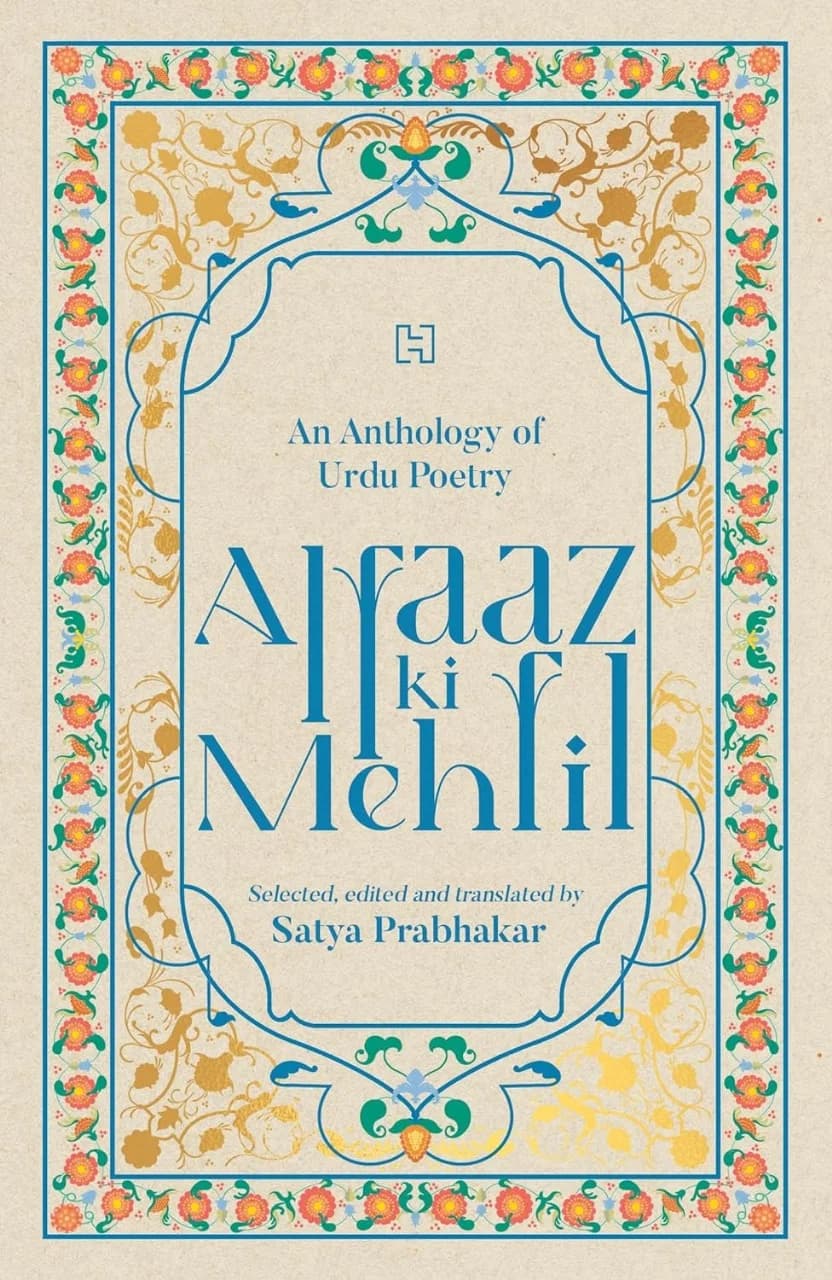
Alfaaz Ki Mehfil is a curated space for timeless poetry celebrating words, emotions, and the enduring beauty of expression. From classic Urdu couplets to modern reflections, it brings together generations of poetic voices that speak of love, longing, hope, and the human soul.
Quick Links